
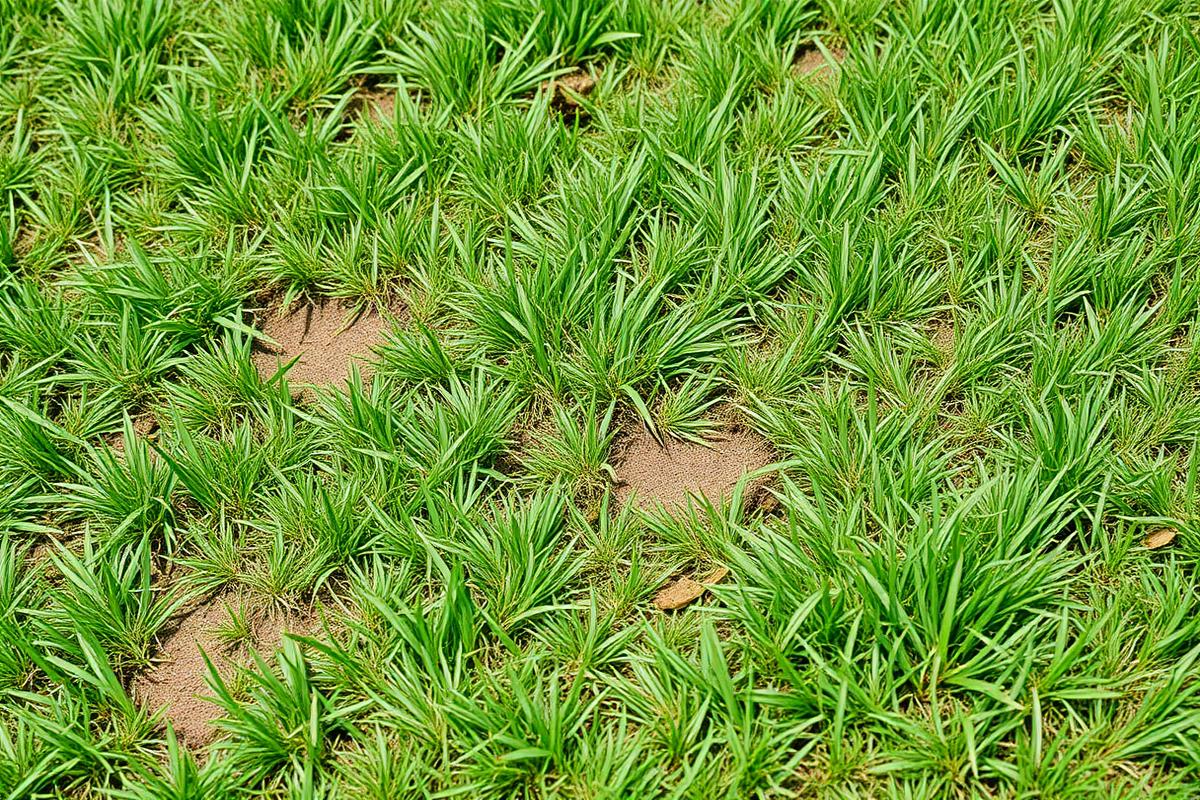
First, check whether the grass is dormant
Dormancy is a survival strategy, not a disease. Grass under heat or cold stress can shut down and turn tan while the crown stays alive. Tug gently on a handful: dormant grass usually resists, and the base of the plant may still be pale green.
Read the shape of the damage
- Straight lines and hard edges often follow something applied or spilled.
- Circles and arcs may suggest disease activity.
- Irregular areas that lift like carpet may suggest root feeding.
- Even browning across sunny areas is more consistent with drought.
Consider what changed recently
Write down anything that happened in the two to three weeks before the browning appeared: a fertilizer application, a heat wave, a new mowing height, an irrigation change, a pet, or a contractor working in the yard. Cause and effect in lawns is often delayed by days.
Take photos before you act
Photograph the whole lawn, a close-up of the boundary between brown and green, and the soil beneath the affected turf. If the situation changes, you will have a record, and if you end up talking with a professional, those images are the first thing they will want to see.