
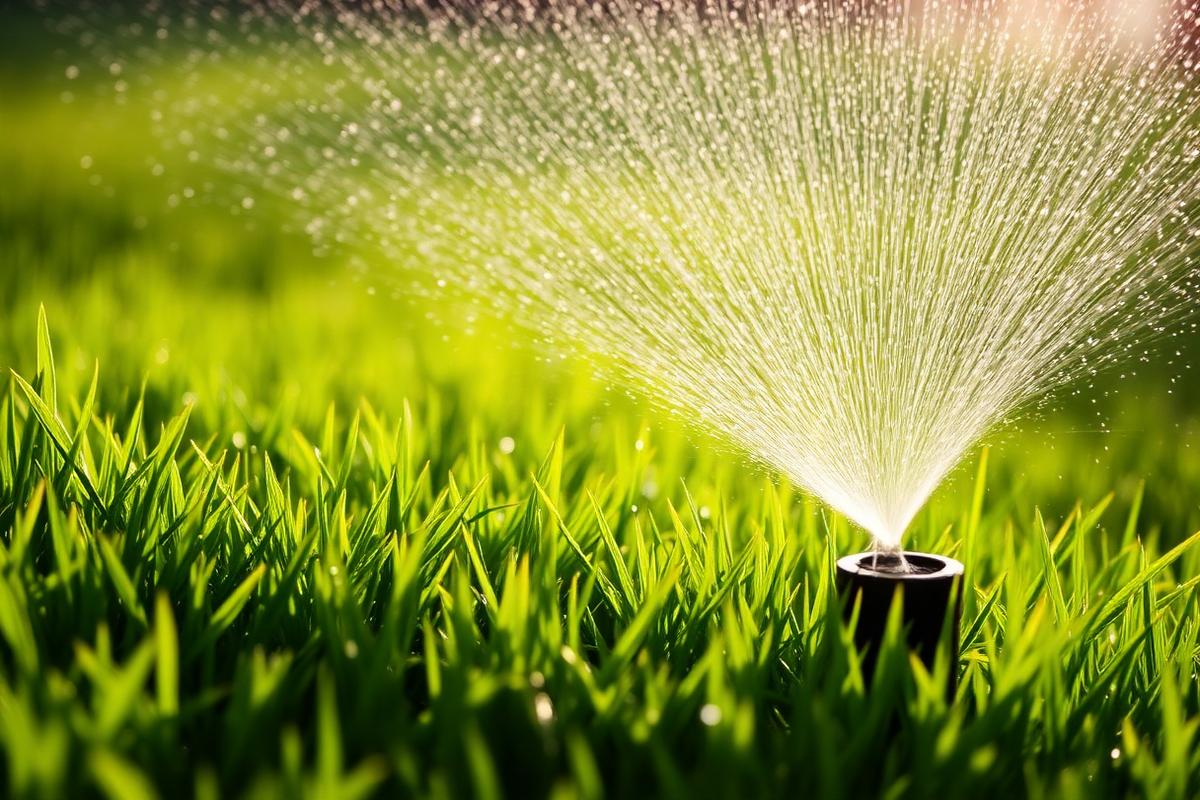
Measure what your sprinklers actually deliver
Set several straight-sided containers such as tuna cans around a zone, run it for fifteen minutes, and measure the depth in each. That tells you both your output rate and how evenly the zone covers the area.
Water early in the day
Early morning watering loses less to evaporation and lets blades dry before nightfall, which reduces the length of time leaves stay wet. Evening watering during humid weather can extend leaf wetness considerably.
Let the lawn tell you when it is thirsty
- Footprints that stay visible after you walk across
- A dull blue-gray cast replacing bright green
- Blades folding or rolling lengthwise
- Soil that is dry a few inches down
Watering in response to these signs, rather than on a fixed calendar, adapts automatically to rainfall and heat.
Adjust for soil and season
Sandy soil drains quickly and may need smaller, more frequent applications. Clay holds water and can run off if you apply too fast, so splitting a cycle into two shorter runs a half hour apart often helps. In cooler months, most lawns need considerably less.